
"northern Haiti coffee"
100 article(s) found
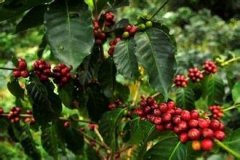
Haitian pollution-free coffee
The Republic of Haiti is an island country in the northern Caribbean, which means a mountainous country in Indian. Haiti has a shortage of energy, backward industry and an economy dominated by agriculture. As one of the most materialistic regions in the world, Haiti is a world-renowned producer of coffee beans. Most of the coffee produced in Haiti is grown in a pure natural state.

Smooth and smooth Dominican Coffee Flavor and Taste introduction to the Fine Coffee production area
There are four major mountains in Dominica. The Cordillera Septentrional (northern mountain range) extends westward from the base mountain city on the northwestern border of Haiti to the northeastern Samina Peninsula. Cordillera Central (Central Mountains) extends from the multinational west of Haiti to the central part of the island of Spain, and gradually slows down to the south, du in the Central Mountains.

Introduction to the description of Flavor of Fine Coffee Bean Manor in Dominica Coffee Variety producing area
In 1677, about 4,000 French lived in 11 villages in the west of the island. In 1697, France and Spain ceded the western part of the island to France according to the Leswick Treaty of the Alliance War, formally recognizing French sovereignty over Haiti in the western part of the Spanish island, and the eastern part of the Spanish island was called East Santo Domingo. France continues to develop its agricultural economy on the island of Hispaniola.

Haiti Haiti recommended by countries producing boutique coffee beans
Despite well-known problems and fluctuating coffee quality from politically troubled lands, Haiti is still trying to produce some high-quality coffee. Most of the coffee produced by Haidi is grown in a pure natural state, which is not intentional but the result of material shortage, because farmers are too poor to afford to kill.

A brief introduction to the history and culture of the origin and development of Dominican boutique coffee
Boutique coffee has become popular in recent years. High-quality coffee beans produced by some Dominican estates have a rich aroma, mellow taste and moderately bright sour taste, which are not far from the more famous Puerto Rico beans or Jamaican beans, and are also worth tasting. Dominica coffee beans have moderate acidity and rich fruit flavor. Western Hispaniola, 1500 m above sea level

A brief introduction to the History and Culture of the Origin and Development of Santo Domingo Coffee
Unlike coffee produced in Haiti, most of the coffee grown in the Dominican Republic has been washed, which is a symbol of high quality. Miniga Coffee uses a washing method to treat coffee beans, so that the quality of treated coffee beans is more guaranteed. The coffee beans treated by washing method retain more original flavor than the drying method, and the aroma is pure and soft. Carefully selected and made in this way

A brief introduction to the origin, development, history and culture of Santo Domingo boutique coffee beans with intertwined aftertaste
Dominica coffee is mainly produced in areas such as Cibao in the Central Mountains, the Caribbean and Barahona. There are many large estates in Siwao, and coffee trees are planted with 75% Kaddura and 25% Tibica. In terms of varieties, Baraona is the region with a high proportion of Tibika seeds.

A brief introduction to the flavor, taste and aroma characteristics of Santo Domingo coffee beans with excellent acidity
Turning to the introduction of Dominican coffee, the most distinctive features are fresh and elegant, full of particles, excellent acidity and pleasant flavor (two colleagues agree with this). Coffee in Dominica varies slightly in taste according to the altitude of the region where it is grown, with sour but rich taste in the highlands, and less sour and smoother taste in the lowlands. And some Dominican villages

A brief introduction to the market price of Dominica Santo Domingo coffee varieties with mellow taste
The temperate climate in Dominica is conducive to coffee cultivation, and the best places to grow coffee are the Barahona region in the southwest and the Cibao Valley north of Santiago, Dominica's second largest city. The northern region, represented by Hibao, and the southern region, including Okayabani Santo Domingo, produce good coffee. Among them, Santo
A brief introduction to the cultivation of fine coffee beans in Santo Domingo, geographical location, climate and altitude
The Dominican Republic has also experienced a history of unrest and poverty, and now the country has implemented democratic elections and entered a period of stable development, but it has not yet formally established diplomatic relations with China, but has maintained so-called diplomatic relations with Taiwan. It seems that this has nothing to do with coffee, but in fact, it still has an impact. The exchanges between the two countries that have not established diplomatic relations are subject to many restrictions in all aspects, and of course they will.

A brief introduction to the origin, development, history and culture of Santo Domingo boutique coffee beans with excellent acidity
The temperate climate in Dominica is conducive to coffee cultivation, and the best places to grow coffee are the Barahona region in the southwest and the Cibao Valley north of Santiago, Dominica's second largest city. The northern region, represented by Hibao, and the southern region, including Okayabani Santo Domingo, produce good coffee. Among them, Santo

A brief introduction to the cultivation of fine coffee beans in Santo Domingo, geographical location, climate and altitude
The temperate climate in Dominica is conducive to coffee cultivation, and the best places to grow coffee are the Barahona region in the southwest and the Cibao Valley north of Santiago, Dominica's second largest city. The northern region, represented by Hibao, and the southern region, including Okayabani Santo Domingo, produce good coffee. Among them, Santo

Santo Domingo Coffee Estate Breed Flavor Introduction
Western Hispaniola, harvested in the mountains above 1500 meters, full grain coffee The Dominican Republic and Haiti are neighbors, and both have Hispaniola. The best production site is Barahona in the southwest, but Juncalito and Ocoa are also

A brief introduction to the description of the flavor, taste and aroma characteristics of Santo Domingo boutique coffee beans
The temperate climate in Dominica is conducive to coffee cultivation, and the best places to grow coffee are the Barahona region in the southwest and the Cibao Valley north of Santiago, Dominica's second largest city. The northern region, represented by Hibao, and the southern region, including Okayabani Santo Domingo, produce good coffee. Among them, Santo

Delightful aroma Dominican fine coffee beans grinding degree roasting degree processing method brief introduction
Dominica's mild climate is conducive to coffee cultivation, and the best production areas for coffee are the Barahona region in the southwest and the Cibao Valley in the interior north of Santiago, Dominica's second largest city. The northern region, represented by Ciba, and the southern region, including Ocayabani Santo Domingo, produce fine coffee. Among them, Santo.

Characteristics of Dominica coffee beans in Dominica coffee producing areas
The Dominican Republic is located in the east of the island of Haiti in the West Indies, bordering the Republic of Haiti to the west, the Atlantic Ocean to the north and the Caribbean Sea to the south. With an area of about 49000 square kilometers and a population of 7.1 million, the Dominican Republic and the Republic of Haiti coexist on an island bordering Haiti. Like its neighbors, the Dominican Republic had a history of revolution and poverty, but now
A brief introduction to the planting market price of Dominican boutique coffee beans with pleasant fragrance
The temperate climate in Dominica is conducive to coffee cultivation, and the best places to grow coffee are the Barahona region in the southwest and the Cibao Valley north of Santiago, Dominica's second largest city. The northern region, represented by Hibao, and the southern region, including Okayabani Santo Domingo, produce good coffee. Among them, Santo

What's the flavor of Dominica coffee, Caribbean red coffee? How about Dominican coffee?
For more information on coffee beans, please follow the Coffee Workshop (Wechat official account cafe_style) the Dominican Republic is located in the east of the Central Haitian Island in the West Indies, the Republic of Haiti is bordered by the Republic of Haiti to the west, the Atlantic Ocean to the north and the Caribbean Sea to the south. With an area of about 49000 square kilometers and a population of 7.1 million, the Dominican Republic and the Republic of Haiti coexist on an island, with the sea.
Introduction of flavor and taste characteristics of Asian coffee beans Santo Domingo coffee beans in Dominica
Flavor and taste characteristics: fresh and elegant, full particles, excellent acidity, pleasant aroma. The Dominican Republic is located in the east of the island of Haiti in the West Indies, bordering the Republic of Haiti to the west, the Atlantic Ocean to the north and the Caribbean Sea to the south. With an area of about 49000 square kilometers and a population of 7.1 million, the Dominican Republic and the Republic of Haiti coexist on an island bordering Haiti. Like its neighbors.

A brief introduction to the treatment method of grinding degree and baking degree of full-grained Santo Domingo fine coffee beans
The temperate climate in Dominica is conducive to coffee cultivation, and the best places to grow coffee are the Barahona region in the southwest and the Cibao Valley north of Santiago, Dominica's second largest city. The northern region, represented by Hibao, and the southern region, including Okayabani Santo Domingo, produce good coffee. Among them, Santo